
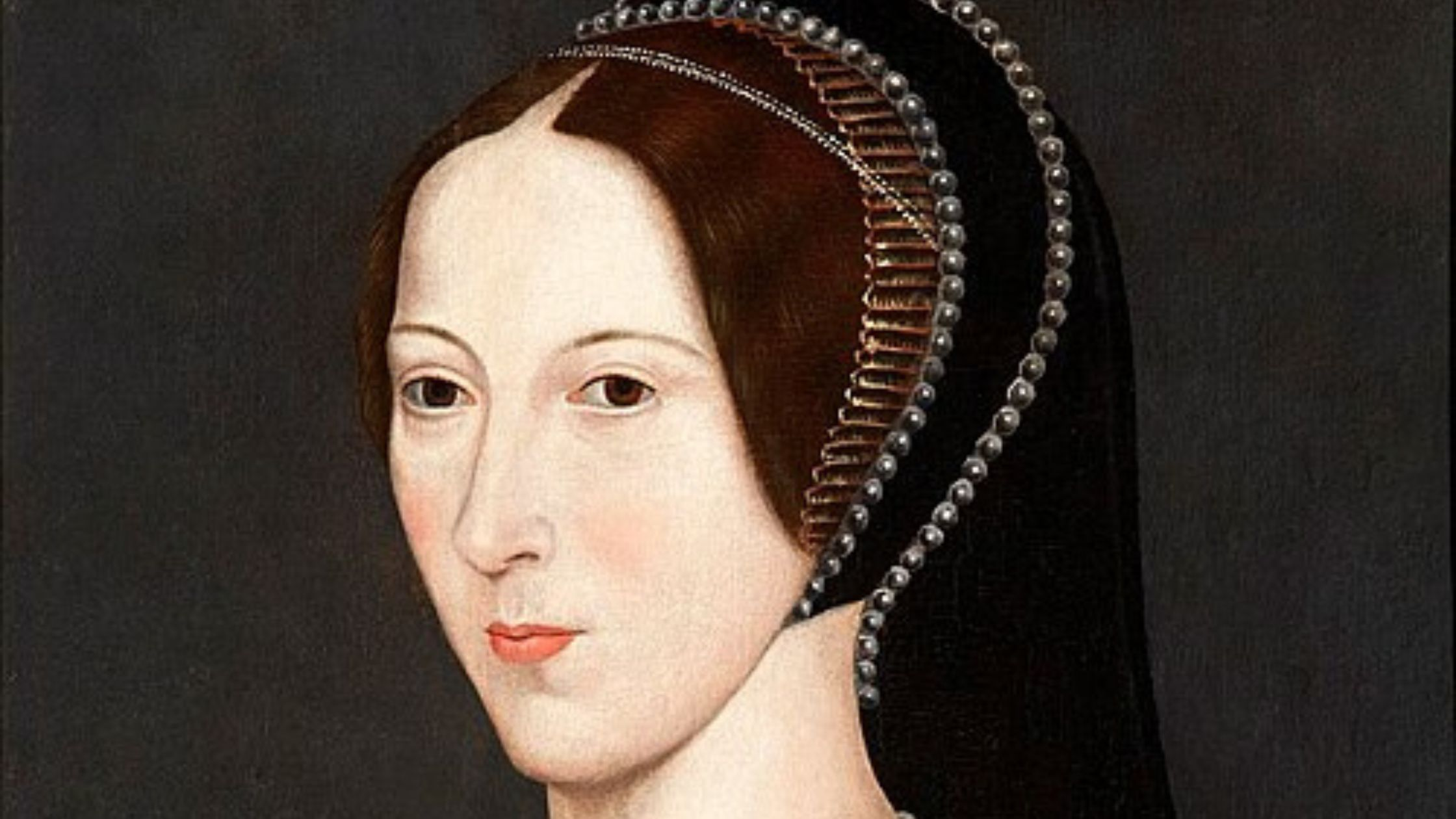
Anne Boleyn is undoubtedly one of the most famous women in British history. She was the second wife of Henry VIII and the first one to be executed. And since the day of her execution, her gradual rise to power and the abrupt downfall have captured the minds and hearts of many.
Despite the countless books, documentaries, movies, plays, TV dramas, and more, the real story of Anne Boleyn is still quite elusive. If you wanted, you could build evidence to argue that Anne was a victim of her circumstances, surrounded by powerful men. Or you could build the case that she was a femme fatale who deserved her punishment.
So what really is the truth?
Let’s explore that in this article.
Table of Contents
Was Anne Boleyn a witch?
When King Henry was married to Anne Boleyn, he was once overheard saying that he was a victim of her ‘bewitchment and charms’. This led to many writers exploring the idea of witchcraft and many more to make unfounded claims that Anne was a witch.
In fact, the first explicit mention of Anne being a witch was made in the 20th century. In 1920, anthropologist Margaret Murray argued that Anne Boleyn, Joan of Arc, and others belonged to a secret pagan cult.
Fun fact: Did you know Harry Potter films had a photo of Anne Boleyn hanging in Hogwarts?
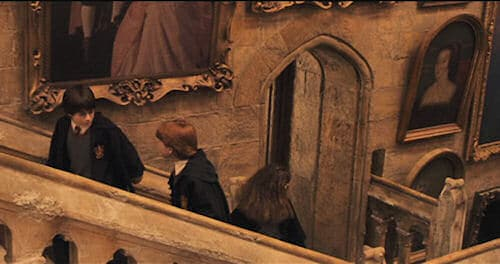
Image source: www.theanneboleynfiles.com
Why was Anne Boleyn Executed?
Anne was brought to trial based on evidence produced by King Henry’s chief minister, Thomas Cromwell.
She was accused of the following crimes:
- Treason
- Incest
- Adultery
It was alleged that Anne was having affairs with five men: Henry Norris, William Brereton, Francis Weston, Mark Smeaton, and George Boleyn, who was her biological brother. This is why she was accused of incest.
Of all men, only Mark Smeaton admitted to the affair in court. However, there is evidence that this confession was extracted using torture. No one else has been recorded as confessing their crimes.
In addition to that, adultery was not a crime, so Anne could be accused but not punished. So, Cromwell added treason to the charges. He claimed that Anne planned to kill King Henry and marry one of her lovers. Two years before this accusation, King Henry had passed a law that said that if anyone even discussed his death, it was treason. And so, most possibly, this was the charge that led to the execution.
Many historians agree that King Henry had called for the French executioner before Anne even came to know that she was on trial. And once the trial started, all six were speedily executed.
Rumours surrounding Anne Boleyn
50 years after her execution, a catholic priest, Nicholas Sander, started spreading rumours about Anne Boleyn.
Now why would a man start rumours about a woman who had already died?
Well…He didn’t approve of Queen Elizabeth I. And he believed that by spreading rumours about Elizabeth’s mother, Anne Boleyn, he’d be able to bring her down.
Sander spent his entire adult life launching rebellions to undermine Queen Elizabeth’s reign. He even authored the famous book ‘Of the Origin and Progression of the English Schism‘.
This is what he writes about Anne Boleyn’s looks:
… rather tall of stature, with black hair and an oval face of sallow complexion, as if troubled with jaundice. She had a projecting tooth under the upper lip, and on her right hand, six fingers. There was a large wen under her chin, and therefore to hide its ugliness, she wore a high dress, covering her throat…She was handsome to look at, with a pretty mouth, amusing in her ways, playing well on the lute, and was a good dancer.
In short, she was a good, lively sort of woman, but was ugly…yet, she was also handsome to look at.
It’s no wonder that he seems a bit confused about Anne’s looks, given that he was born in 1530 and Anne was executed in 1536. So, even if we give him the benefit of the doubt and believe that he had actually met her, he was a toddler at the time Anne was alive. Can we realistically rely on information that he remembered from his toddlerhood?
So, where did he get these ‘facts’ about Anne’s looks?
There are many gossip magazines and even letters written by a diplomat that refer to Anne’s ‘lumpy neck’. However, we don’t have any evidence of whether this is true or not.
The sixth finger is often referred to as a fact in many websites and novels, and was first mentioned by George Wyatt, a writer, several decades after Anne’s death. There is no mention of 6 fingers before Mr. Wyatt wrote about it. Furthermore, if we look at what Mr Wyatt wrote in his book, it does not seem like he’s writing about a finger, more so as a wart…this is what he wrote:
There was found, indeed, upon the side of her nail upon one of her fingers, some little show of a nail, which yet so small, by the report of those who have seen her, as the workmaster seemed to leave it an occasion of greater grace to her hand, which with the tip of one of her fingers, might be and was usually by her hidden without any least blemish to it.
We have to mention here that none of the credible sources refer to Anne as being the most beautiful woman. She was rather known for her mental wit and charm.
Books to Read about Anne Boleyn’s Life
- The Afterlife of Anne Boleyn: Representations of Anne Boleyn in Fiction and on the Screen by Stephanie Russo
- Love Letters of Henry VIII to Anne Boleyn by Henry VIII