
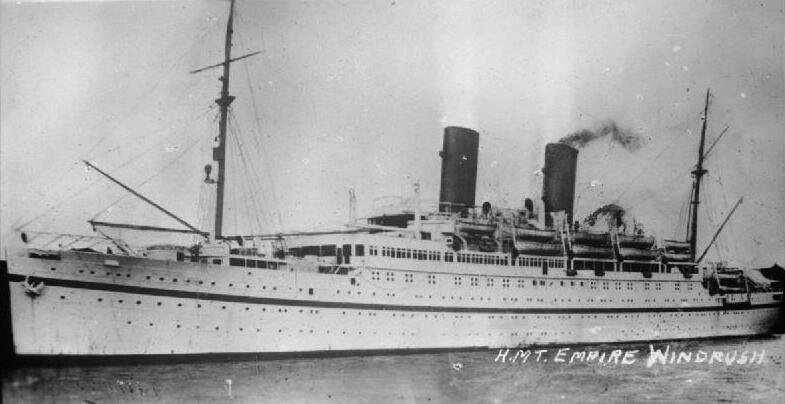
A ship named Empire Windrush docked at Tilbury, Essex on 21 June 1948. The ship was originally a German Passenger liner, but the British acquired it as part of Germany’s war reparations. Britain used this ship to transport people from the Caribbean and Central America to the UK. At the time, it was believed that the ship carried 500 people, but documents at the UK National Archives suggest there were about 1027 passengers on board. Of these, 802 people came from the Caribbean Islands.
Table of Contents
Were the Windrush Passengers the First Black People to immigrate to Britain?
No. The Empire Windrush was the third ship that brought black people to England. The first two were Ormonde and Almonzara.
In addition to the people who came on these ships, during World War 2, the British hosted nearly 1,50,000 Black American Tropes.
And that’s not all; there are written records of at least 20,000 Black People living in England during the late 1700s.
Why Did the Windrush Generation Choose to Emigrate to Britain?
- Many had served in the RAF, army, or navy during the war. They were also British citizens, so they felt a sense of belonging to the country.
- Many felt they would find a better life in Britain.
What Life Was Like When Living In Britain’s Caribbean Colonies?
The Caribbean colonies were underdeveloped economies. Even though slavery was abolished a century ago, the colonies had barely changed. The Great Depression made the situation even worse. By 1939, the islands saw hunger marches, labour strikes, and excessive violence.
Impact of the Moyne Report
In 1938, a royal commission was sent to investigate what was going on in the Caribbean. The report, often referred to as the Moyne Report, was initially delayed because of the war. It was finally published in 1945. Many felt that the report had watered down recommendations, which led to a modest, but not enough, sum being allocated to the Caribbean.
What was happening in Britain?
Meanwhile, the British economy was also in shambles. There was a huge shortage of jobs; official records suggest that at one point there were 1.3 million job vacancies. And so, the people really believed that they would get a job, and thus a better life, if they went to Britain.
And you’d think this was a perfect win-win situation. The jobless people in the Caribbean would fill the job vacancies, and everyone would be happy.
But that’s not the case.
A delegation was sent to the Ministry of Labour to encourage them to say that the ample job opportunities in Britain were just a rumour. The Prime Minister, Clement Attlee, was not pleased to learn that the Windrush was heading towards Britain. He wondered if he could divert it to Africa instead. He knew that once the ship docked, he would not be able to turn the people away, legally, as they were all British citizens. And so, they quickly came up with a policy to ensure that the people had to disperse to various corners of the country, lest they gather in one place in large numbers.
Once they arrived in Britain, most people aboard the Windrush moved on to the jobs that they had secured in advance through their contacts. Only about 230 people didn’t have jobs waiting for them, and they were sent to live in an unused bomb shelter under Clapham Common, an urban park located in Clapham, south London.
They were issued thin blankets and allocated bunk beds. They were served tea and a small portion of bread. For people accustomed to living in bright sunlight, this dark, dingy underground was a rude shock.
One of the people later said this about the accommodation:
We curiously eyed the network of poorly lit, clammy, musty tunnels that had been offered as residence. It was primitive and unwelcoming, like a sparsely furnished rabbit’s warren. But in a strange new land there were few alternatives.
The fact that it felt ‘unwelcoming’ is no surprise. The British wanted them gone. They feared if more people came to their shores, it would cause ‘racial disharmony’.
One MP said:
… is likely to impair the harmony, strength and cohesion of our people and social life and cause discord and unhappiness amongst all concerned.
The Colonial Secretery, Arthur Creech Jones, was sure that the bitter British winter would help them get rid of ‘these’ people.
However, the people on the ground had an opposite reaction to the newcomers. Many employers welcomed the hard-working immigrants and ensured that they didn’t leave so soon.