
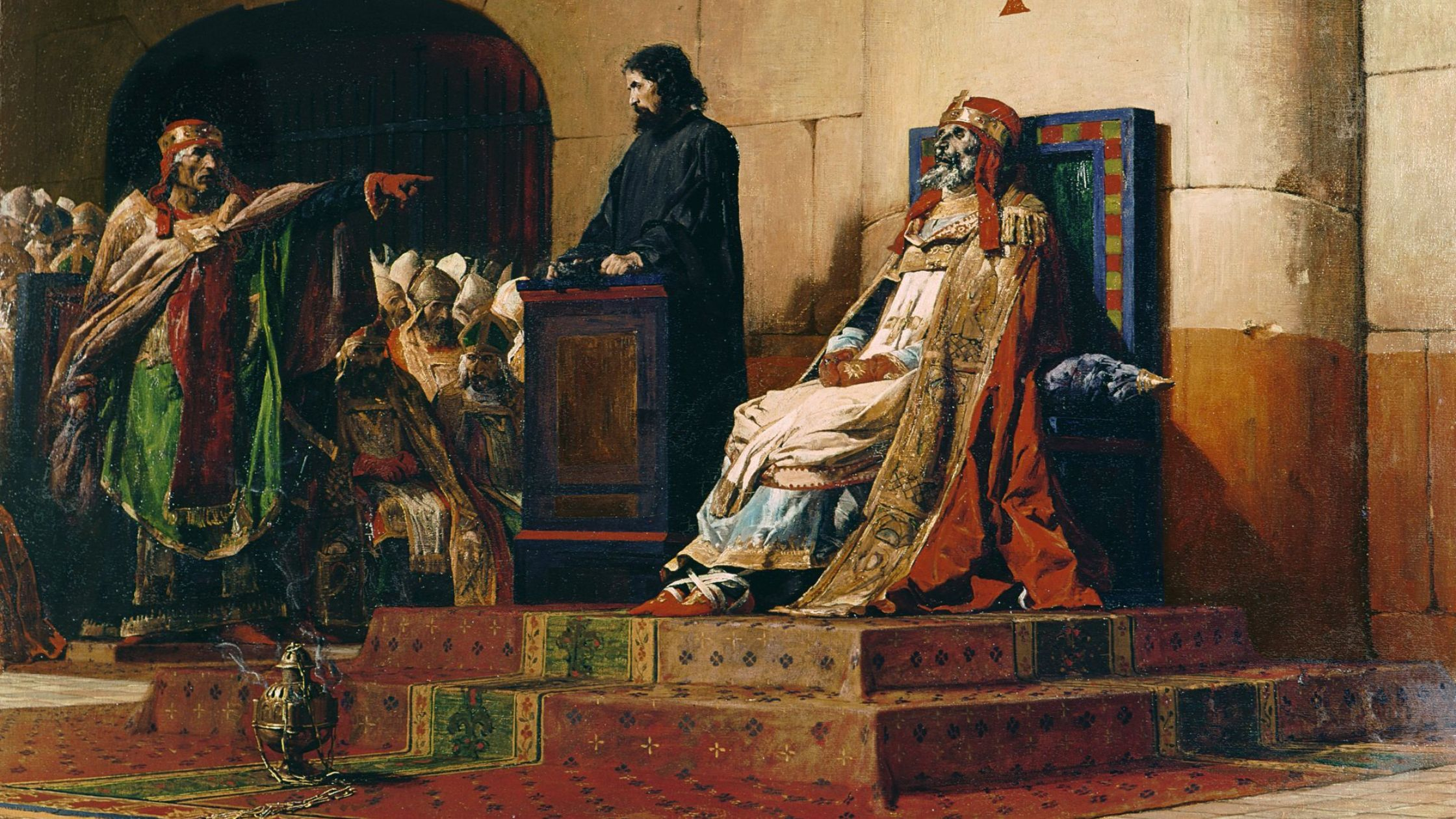
One cold January morning in the year 897, Pope Stephen ordered the corpse of a former pope, Pope Formosus, to be exhumed from his grave. He wanted Formosus to be tried for his alleged crimes at a special meeting, called a synod.
And so Formosus’s rotting cadaver was dragged up from the grave, dressed in papal robes, and put on the throne, and was even ‘cross-questioned’. Yes, he was actually interrogated.
He was allocated a cleric, who was still in his teens, to act as his ‘defence lawyer’, who tried to ‘defend’ him when Pope Stephen started accusing him of everything he believed he had done.
To nobody’s surprise, Formosus was found guilty on all accounts. He was stripped of his papal attire and the three fingers, with which he had blessed people, were cut off. He was then buried again in a ‘common man’s’ grave.
A few days afterwards, Pope Stephen started to believe that Formosus’s supporters might not take kindly to this news, and that they might dig up his bones and save them as ‘holy relics’. So, he had Formosus dug up again and ordered that his body be dumped into the River Tiber.
Unfortunately for him, someone managed to retrieve Formosus’ body from the river.
The Aftermath of the Cadever Synod
Formosus’ supporters soon organised a counter-coup. They succeeded and stripped Stephen of his vestments and demoted him to mere ‘monk’ status. He was later put in prison and was strangled to death.