

It all started in 1545, when the purest silver the world had ever seen was discovered in the Andes Mountains of South America.
Three decades later, in 1581, the Emperor of China announced that his people now needed to pay their taxes in silver. So, to legally pay their taxes, the Chinese citizens started to buy more silver. We all know what happens when the demand for a particular product rises. So, yes, silver became more expensive. So much so that at one point, it was even more expensive than gold!
And most of this silver was purchased from Spain. So supply was taken care of.
In this article, we will explore how this one decision of charging taxes in Silver helped China dominate the trade world for 400 years. And how the butterfly effect of the decision led to its eventual destruction.
Table of Contents
How Britan’s Love For Tea Paved Way for The Opium Wars
In the 18th Century, China was the greatest economic and cultural capital of the world. It was a monarchy and was ruled by the great emperor Chen Lu.
At the time, the world was enthralled by China’s porcelain, silk, and, most importantly, tea. And if the world wanted to buy these much-coveted goods, they had to pay in the only currency that China accepted: Silver.
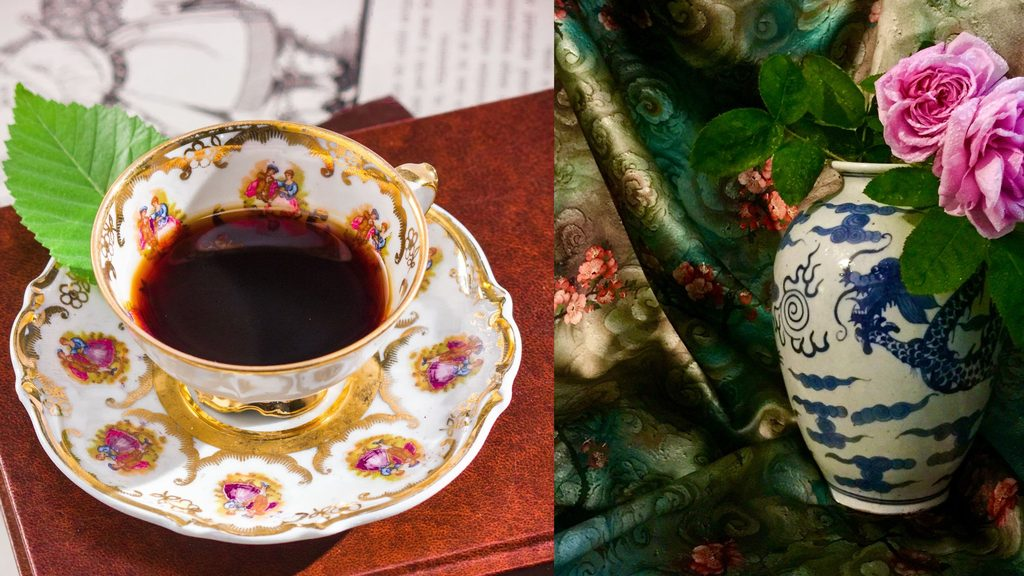
This is where Britain enters the scene. Known for its love of tea, Britain knew of only one country that could fulfill its demand. That was China. In fact, Britain purchased over 80% of all tea shipped from the port of Canton. And to buy tea, they had to pay in silver.
What’s interesting here is that only one company had the rights to import all of this tea. It was The British East India Company. Now the company wanted goods from China, but it didn’t have anything that China wanted in return. And so a LOT of money was being spent, but they were getting nothing in return.
This was a problem.
And so, in 1792, the East India company reached out to the British government to help them. The government appointed Lord McCartney, a statesman and diplomat, to head the trade mission to China. His role was to negotiate terms of trade that were advantageous to the English.
In the book ‘The Search For Modern China‘ by Pei-kai Cheng, Michael Lestz, and Jonathan D. Spence, it has been noted that the British Home Secretary wrote to Lord McCartney, ‘… upon the present view of the matter, I am inclined to believe that instead of attempting to gain upon the Chinese Administration by representations founded upon the intricacies of either European or Indian Politicks, you should fairly state, after repeating the general assurances of His Majesty’s friendly and pacific inclinations towards the Emperor, and his respect for the reputed mildness of his Administration, first the mutual benefit to be derived from a trade between the two Nations, in the course of which we receive beside other articles to the amount of twenty millions of Pounds weight of a Chinese herb, which would find very little vent, as not being in general use in other Countries, European or Asiatic, and for which we return woolens, cottons and other articles useful to the Chinese, but a considerable part is actually paid to China in bullion… Secondly, that the great extent of our commercial concerns in China, requires a place of security as a depot for such of our Goods as cannot be sold off or shipped during the short season that is allowed for our shipping to arrive and depart, and that for this purpose we wish to obtain a grant of a small tract of ground or detached Island, but in a more convenient situation than Canton, where our present warehouses are at a great distance from our Ships, and where we are not able to restrain the irregularities which are occasionally committed by the seamen of the Company’s Ships, and those of private traders. Thirdly, that our views are purely commercial, having not even a wish for territory; that we desire neither fortification nor defense but only the protection of the Chinese Government for our Merchants or their agents in trading or travelling…‘
In simpler terms, Lord McCartney was asked to persuade the Chinese Emperor to accept British goods as payment against their purchases, instead of insisting on silver. Along with that, they also wished to develop a ‘trading base’ on Chinese land. The British were optimistic about the trade agreement, as they believed their growing economic and military power would be their leverage.
They were wrong to be so optimistic. The Chinese Emperor outright rejected their proposal. Leaving the British to come up with a powerful product that they believed would leave China begging for more. And thus started their powerful campaign that led to the Opium Wars.
Books About the Opium War
Want to know more about the war? Here are some amazing reads:

The IBIS Trilogy
Amitav Ghosh
Imperial Twilight
Stephen R. Platt
Opium Wars
Hourly History
Quing Empire…
Mao Haijian